
Everyone knows that under no circumstances should alcoholic beverages be combined with antibiotics, but now that the course of treatment is over and the last pill has been taken, it is unclear how long you should wait before drinking strong alcohol after taking antibiotics. Should you wait a few days, or can you have a couple of drinks that same evening? To answer this question, you need to understand in more detail how antibacterial drugs and alcoholic beverages affect the body, and how long after treatment should pass before drinking alcohol will not harm your health.
How many days after antibiotic treatment can you drink alcohol?
Drugs in this group are prescribed for the treatment of inflammatory diseases that the body cannot cope with on its own. Antibiotics attack pathogenic microorganisms, destroying their cellular structure, thanks to which the disease recedes and the patient’s well-being improves.
However, there is another side to taking antibacterial drugs. Since their elimination from the body falls entirely on the liver, it has to take a significant hit. Experts have also proven that in people who consumed alcohol during antibiotic therapy, the effectiveness of treatment was significantly lower than in patients who completely abstained from alcohol.
It all depends on the drug used for treatment. It is best to check this with your doctor. They will tell you in detail how long it will take before you can return to your normal lifestyle and drink alcohol. If you are unable to contact your doctor, you can carefully read the instructions for the drug.
It should indicate:
- the duration of treatment;
- the compatibility of the medicine with ethanol;
- the period during which alcohol cannot be consumed, even after the end of therapy.
Usually, the ban lasts from three to seven days. It all depends on the type of medicine and how long it takes to be eliminated from the body.
If the summary does not contain any information about the compatibility of the drug with alcohol, this does not mean that you can start drinking immediately after the end of the course of treatment. In any case, it is recommended to wait at least 24 hours to allow the residual components of the drug to leave the body.
It is important to remember that even if the instructions for the drug do not mention interaction with ethyl alcohol, you should still not drink alcohol immediately after taking antibiotics. This can harm the body, which is still recovering from illness, and cause unwanted side effects.
Which antibiotics should never be combined with alcoholic beverages?
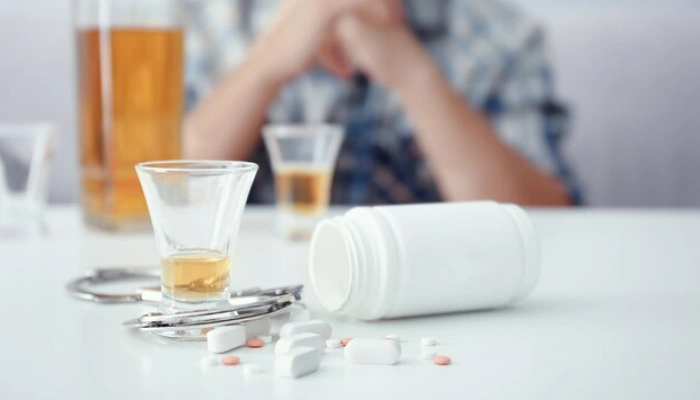
Despite all the warnings from doctors, some patients undergoing treatment with antibiotics still manage to drink alcoholic beverages. They do not even think about the possible consequences and claim that all the doctors’ warnings are nothing more than excessive caution. In fact, even if the simultaneous use of alcohol and medication has not affected the patient’s well-being, this does not mean that it has had no effect on the body.
The components of ethyl alcohol and medication may not interact directly, but ethanol can significantly reduce the therapeutic properties of the drug and the effectiveness of treatment. The disease will not go away and an additional course of therapy will be required, which will place a heavy burden on the liver and other organs of the excretory system.
There is also a group of antibacterial drugs that are strictly prohibited from being taken with any alcoholic beverages. Information about incompatibility with alcohol is indicated in the summary for these drugs, and the patient should also be warned about this by the attending physician responsible for prescribing the medication.
Medicines that are completely incompatible with ethyl alcohol include:
- tetracyclines. widely used in medical practice to treat various infectious diseases.
- levomycetin. drugs in this group can cause serious side effects on their own, and taking them at the same time as strong alcoholic drinks can make the drug’s toxic effects worse.
- lincosamides. drinking alcohol while taking these antibiotics has a negative effect on the central nervous system and liver.
- aminoglycosides. these are some of the strongest antibacterial agents, which do not mix well with other drugs. it is strictly contraindicated to drink alcoholic beverages during treatment with these drugs.
- cephalosporins. simultaneous use of these drugs with strong alcoholic beverages can cause a disulfiram-like reaction. the person will experience symptoms of severe intoxication, which will lead to a significant deterioration in their well-being.
- anti-tuberculosis antibiotics.
- macrolides. the interaction of these substances with ethanol has a strong toxic effect on the brain and liver.
- antibiotics used in the treatment of leprosy.
Antibiotics with unclear interaction data
There are some groups of antibacterial drugs whose annotations do not indicate how they interact with ethyl alcohol.
These drugs include:
- antifungal agents;
- vancomycin;
- rifamycin;
- penicillin-based medicines;
- helioomycin.
The fact that the instructions for use do not contain information about the consequences of combining these medicines with alcohol does not mean that their combination is permissible. It should be borne in mind that each person’s body is unique, and while some people will remain unharmed after combining alcohol and antibiotics, others will be at serious risk.
How long after treatment can you drink alcohol?
So how long after treatment can you drink alcohol? It all depends on the type of antibiotics and the physical condition of the patient. If the summary states that drinking alcohol is prohibited while taking the medication, it is better to wait until the residual components of the medication are completely eliminated from the body. This usually takes about two weeks, so it is better to wait until the end of this period before consuming alcoholic beverages.
If the instructions for the medicine do not specify its interaction with ethanol, it is still better not to drink alcoholic beverages for at least three days after the end of therapy.
If you have any further questions, please consult your doctor. They will explain in detail whether you can drink alcohol while taking a particular antibiotic and tell you how long after the end of treatment it is best not to drink alcoholic beverages.
Possible consequences of combining
Drinking alcohol after taking antibiotics can provoke the appearance of undesirable symptoms. The fact is that there are a number of antibiotics that can block the breakdown of ethanol in the body. Because of this, acetaldehyde ceases to be excreted from tissues and organs and begins to accumulate in them.
This leads to poisoning of the body and the person experiences painful symptoms of intoxication:
- nausea and vomiting;
- unbearable headaches that cannot be relieved even with painkillers;
- dizziness;
- difficulty breathing;
- pressing chest pains;
- redness of the skin;
- sweating;
- increase or sharp drop in blood pressure.
This is far from a complete list of the serious consequences of combining alcohol and medication.
It is important to remember that, to date, clinical studies have proven only a small number of antibiotics to be incompatible with ethanol. The rest have either not yet been fully studied or remain in doubt. In any case, people should be aware that strong alcoholic beverages have a negative effect on the treatment process. Ethanol interferes with the normal absorption of drugs and significantly reduces their effectiveness. Therefore, during the course of therapy, you should refrain from drinking any kind of alcohol, even the weakest. This will help to avoid unpleasant side effects and maintain health. After all, no one can say for sure how the simultaneous use of alcohol and antibiotics will affect the health of a particular person.